
Step 1: Use personal observations, interviews and documents
Look at your house and its setting in the neighbourhood
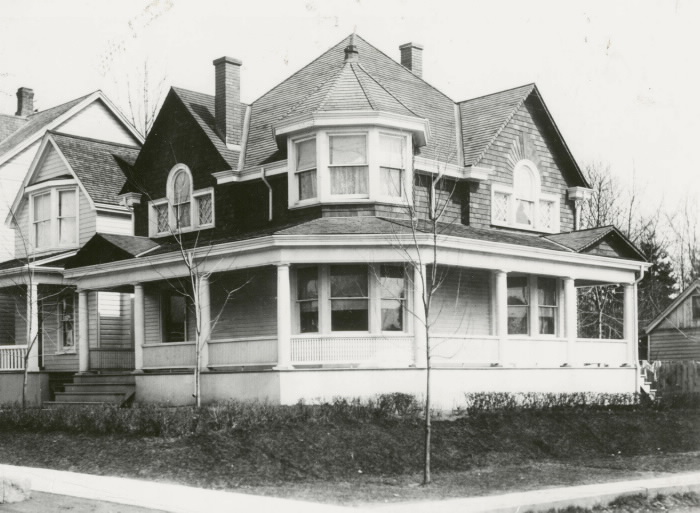
The age of your house may be indicated by its architectural style and whether it looks the same or different from other buildings on the street. A careful examination of your house also will show if alterations or additions have been made over the years.
Talk to previous owners, neighbours and long-time residents
You may discover the approximate age of your house; construction details, such as additions and renovations; the names of previous owners and occupants; and photographs of your house, its occupants, and the neighbourhood.
Look at your deed, assessment notice, or tax bill
These documents may tell you the legal description of your property (lot, concession, and subdivision plan numbers) and the name of the municipality in which the property is located. The information will be useful (and sometimes necessary) for further investigations, especially using tax assessment rolls and conducting land title searches.
Helpful guides on architectural style
Online resources
- What lies beneath (National Post articles by Scott Weir of ERA)
- Architectural style (Ontario Heritage Trust)
Print resources
- Ontario Architecture: a Guide to Styles and Building Terms 1784 to the Present (John Blumenson)
- Ontario Architecture for building styles and terms (Shannon Kyles)
Step 2: Use primary resources available online and at libraries and archives
You are now ready to consult the big three: fire insurance plans, city directories and assessment rolls. But start with the first two, which are easy to use and many years are online. (Toronto building permits and land registry records are also important sources, but they are not for the faint of heart and are not discussed here.)
Fire insurance plans

Fire insurance plans, sometimes called Goad’s atlases, are a quick way to narrow down when a building was constructed. Streets and buildings are shown in great detail on these maps. Published from 1858 to 1973, they can be used to discover details about your house including size, shape and construction materials. Fire insurance atlases and plans published after 1924 are only only available at libraries and archives
Helpful resources
- Toronto Fire Insurance Atlases and Plans, a webpage maintained by TPL, includes chronologically arranged links to Toronto fire insurance atlases and plans, 1858-1924, available digitally from Toronto Public Library, Nathan Ng’s Recursion, City of Toronto Archives, University of Toronto, Library and Archives Canada, and other sources. It also include other info to serve as a general guide.
City directories
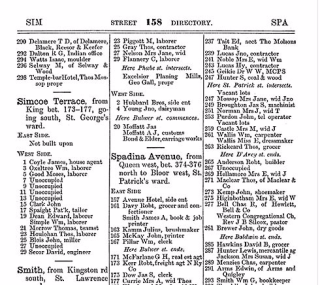
City directories are a convenient way to estimate the date of construction for a property. The directories may show when a site was developed and the names of occupants over the years. Published from 1833 to 2001, the directories usually are organized alphabetically by both street name and occupant's surname.
Begin by locating your street name in the alphabetical list of streets. Check the street number every five or ten years to develop a history of the building's use and occupants, and to narrow the time when the house began to appear in the directories. Once you have established a date range, check the street number year by year to pinpoint precisely its first appearance. By finding the first date that a building appears in the city directories, you can estimate a probable date of construction. By working forward, you can complete a list or property owners and/or occupants.
Be aware that the information in any volume was usually compiled the previous year (for example, the directory for 1900 reflects the status of the site in 1899). Also, a directory lists the occupant of the property who may or may not be the owner.
Also be aware of infill. Sometimes a directory will indicate that a building, which is now located in mid-block, as being at the corner if no closer buildings to the corner have yet been built. Maps should be consulted to avoid confusion.
Many Toronto neighbourhoods were once small villages or independent municipalities, which may be listed in a separate section in city directories
Helpful resources
- Toronto City Directories General guide to use and contents
- Digital Toronto City Directories Links to digital Toronto city directories, 1833 to 1969, digitized by Toronto Public Library and Internet Archive.
- Print Toronto City Directories Guide to using print city directories at Toronto Public Library and links to catalogue records, 1833 to 2001.
- Places in Digital Toronto City Directories, 1837-1969 (online finding aid). Direct links to more than 100 places now part of the City of Toronto that had separate listings in local directories or had their own directories.
- Guide to City Directories of Toronto: Decoding Abbreviations
Assessment rolls

For more accurate information about buildings, city assessment rolls must be consulted. Prepared annually by local municipalities as part of property tax calculations, assessment rolls show the name, occupation, salary, and religion of the “head of household”, as well as the size, buildings, ownership, and assessed value of the property. This detailed data should verify and amplify information found in city directories. Assessment rolls also may indicate changes to a property. An increase in assessed value from one year to the next could suggest the construction of a building or an addition.
The City of Toronto Archives holds the major collections of assessment rolls, in hard copy and on microfilm, for Toronto and its predecessor municipalities. You will need to visit the Archives to see them. (TPL has a small collection of 19th-century Toronto assessment rolls.)
Assessment rolls are organized by municipality. Therefore, you will need to identify the municipality where a property was located when the assessment was made. For example, between 1834 and 1909 sections of today's Beach neighbourhood were part of the City of Toronto, York Township and East Toronto; after 1909 they were all were within the city. Toronto annexation maps 1915 and 1967
Post-1998 assessment rolls are also organized by the six pre-1998 municipalities, even though they are all now part of the City of Toronto. For current assessment information about your property, you can use the Toronto Property System database, available at the City Archives and civic centres.

Be aware of changes in street names and numbers
Some streets in Toronto have been renamed or renumbered over the years. For information on street name changes, consult:
- Fire insurance plans for Toronto
- Street section in the city directories
- Online Street name changes in Toronto for 1901 data
- A "Street name list" prepared by the City of Toronto's Geospatial Competency Centre. Electronic copies are available at the Reference Desk, Humanities and Social Sciences Department, 2nd floor, Toronto Reference Library and the City of Toronto Archives. The list includes almost 10,000 Toronto streets. Information is provided, when applicable or available, on existing and former street names, subdivision plans, names origins and other valuable details.
To avoid confusion on street number changes:
- Compare directory listings with maps. Toronto fire insurance plans are especially useful for locating specific buildings and for providing the street number of buildings, which usually are indicated on the street in front of the building.
- Always keep a record of the occupant's name for each year, as well as the names of the occupants on either side. If all three names or numbers change, then the street has been renumbered. Search the street until you find the same sequence again.
- If the first year your property appears is not described as "unfinished house" or "vacant," you may have simply have encountered a re-numbering of the street.
Step 3: Consult other sources
Maps, pictures, books, etc.
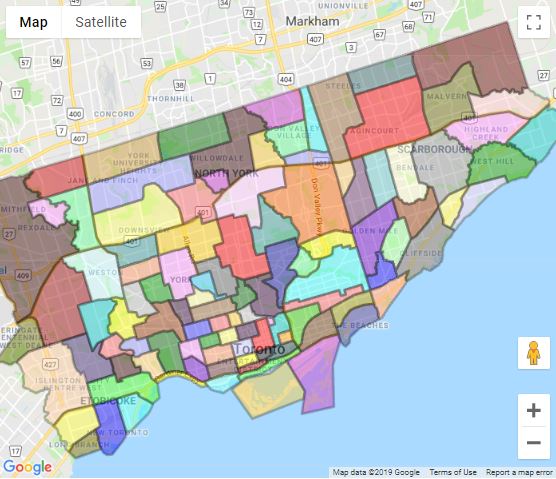
For resource from TPL, you can use Toronto Neighbourhood Map to find books, pictures, maps and other resources about your neighbourhood.
You can also use Toronto Public Library's catalogue to locate additional materials in our collections, as well as use our Digital Archive to find digitized historical images from our collections. (For the catalogue, you can explore subject headings such as Architects--Ontario--Toronto or Architecture--Ontario--Toronto or Architecture, Domestic--Ontario—Toronto or Buildings--Ontario--Toronto or Dwellings--Ontario--Toronto or Historic buildings--Ontario--Toronto.)
Online databases (available to TPL cardholders)
- Globe and Mail Historical Newspaper Archive. June 1844 to December 2001. Advertisements and news stories (it has had a real estate section on and off from the 1910s) are very helpful. Also birth, marriage and death notices. Search by street or person’s name.
- Toronto Star Historical Newspaper Archive. 1894 to 2002. Advertisements and news stories are especially useful for finding information about streets and houses. There may even be pictures! Search by street or personal name.
- Ancestry Library Edition. A genealogy research tool with over 1 billion names. Ontario birth, marriage and death registrations, 1901 and 1911 Census of Canada are among the helpful resources for tracking Torontonians who may have lived in your house.
- Biographical Dictionary of Architects in Canada 1800-1950. Index of articles.
Other house history guides
City of Toronto Archives Find the history of your house
Too much work? Ask for help at your library or hire an expert
Here at TPL, the best place to request assistance is the second floor of Toronto Reference Library, which has staff who specialize with local history resources.
Or, if you want a completely hands-off approach, you can hire researchers that specialize in house histories to do the work for you.
